
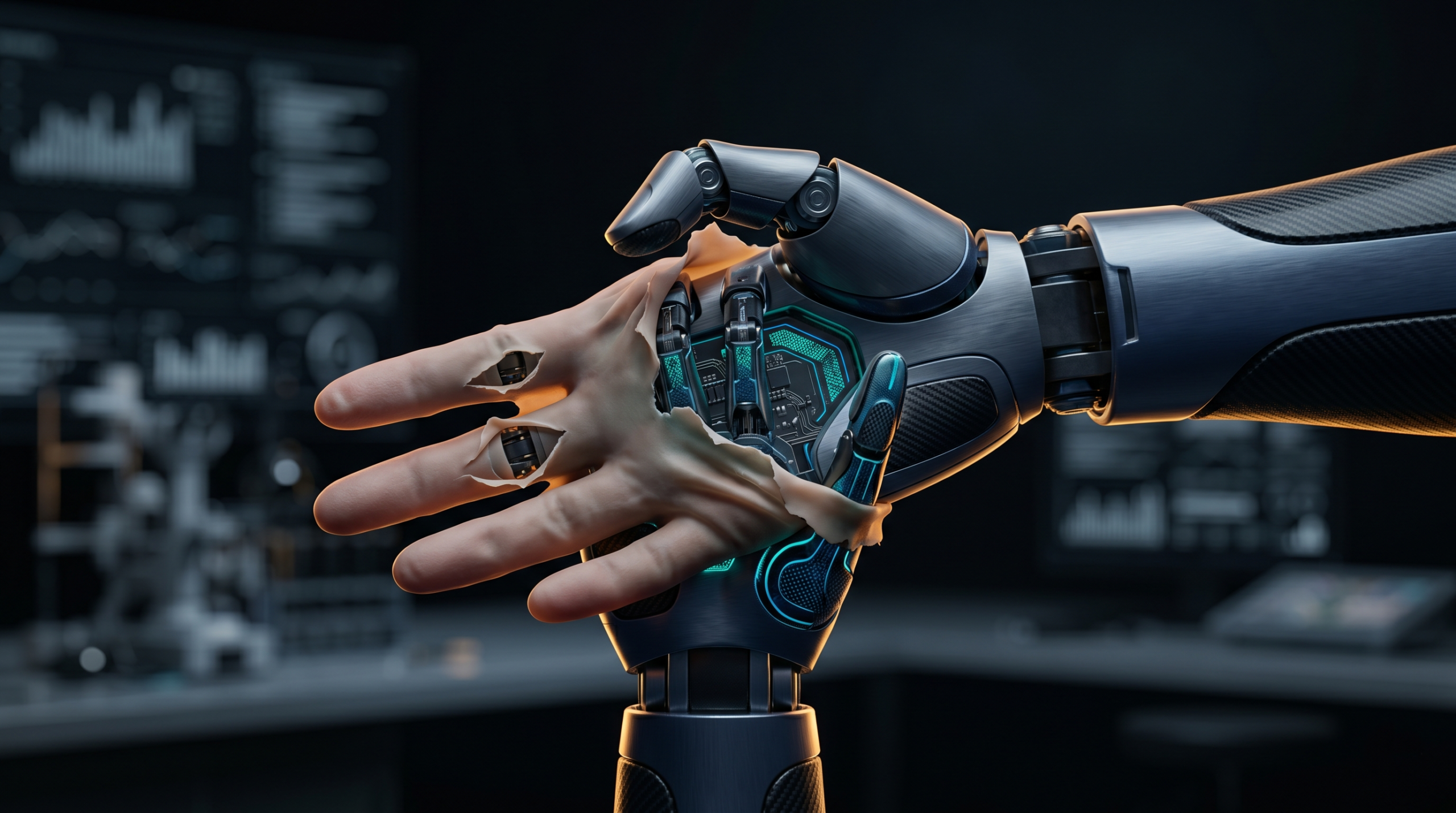
Can AI detectors still catch humanized text? Many people think the answer is no. They believe that once someone edits AI-generated content, detectors stop working.
However, our testing shows a more complex picture. Modern AI detectors often struggle with heavily edited content, yet they do not always fail. In many cases, detectors still identify signals linked to AI-generated writing.
As a result, schools, employers, publishers, and compliance teams face a growing challenge. They must decide whether detector scores remain useful when humans and AI work together on the same document.
In this guide, we examine how detectors respond to humanized AI content, where they succeed, and why mixed human-AI writing remains one of the hardest problems in AI detection.
For a broader understanding of reliability, see our AI Detector Accuracy guide.
Organizations evaluating detection systems should also review research from NIST, which studies AI measurement and evaluation frameworks.
Table of Contents
- What Is Humanized Text?
- Why Human Editing Changes Detector Results
- Can Humanized Content Still Be Detected?
- Why Detectors Disagree
- The Future of AI Detection
- Frequently Asked Questions
Key Takeaways
- Detectors struggle to classify humanized content.
- Detector confidence often drops as editing increases.
- Different detectors frequently disagree on edited documents.
- No detector consistently identifies every mixed human-AI document.
- Detector scores should support review, not replace it.
Can AI Detectors Catch Humanized Text After Editing?
Yes, sometimes.
However, reliability varies significantly. The outcome depends on the detector, the amount of editing, and the type of content involved.
Many people assume editing removes all AI signals. In reality, detectors often continue to identify patterns linked to machine-generated writing.
Nevertheless, confidence scores usually decline after substantial editing. As a result, detectors become less certain.
Tester’s Note: During repeated evaluations, detector confidence frequently dropped after extensive editing. However, several tools still identified characteristics commonly associated with AI-generated content.
What Is Humanized Text?
Humanized text starts as AI-generated content and then undergoes human revision.
Common changes include:
- Manual rewriting
- Adding personal experiences
- Changing sentence structure
- Fact-checking information
- Improving tone and style
- Adding original research
As a result, writers often create hybrid documents that contain both AI and human contributions.
This mixed origin makes classification difficult.
Why Human Editing Changes Detector Results
AI detectors do not know who wrote a document.
Instead, they analyze language patterns commonly associated with machine-generated writing.
When people revise content, they change those patterns. Some disappear. Others become weaker.
Therefore, detectors have less information available.
The more editing a person performs, the harder classification becomes.
The Core Limitation
Current AI detectors evaluate the final text.
They do not observe the writing process.
Consequently, they must infer authorship from the finished document alone.
This limitation affects every major AI detector.
Can Humanized AI Content Still Trigger Detection?
Absolutely.
Human editing does not automatically remove every AI-related signal.
Some revised documents still generate high AI confidence scores. Meanwhile, other documents receive much lower scores.
Several factors influence the outcome:
- The original AI model
- The amount of editing
- The type of editing
- The detector being used
- The detector’s methodology
False-Positive Warning: A high detector score on edited content does not automatically prove AI authorship. Human contributions can significantly influence the final result.
Why Different Detectors Disagree on Humanized Content
One detector may report high AI confidence.
Another may classify the same document as mostly human-written.
This happens because detectors use different datasets, thresholds, algorithms, and evaluation techniques.
Furthermore, humanized content exposes those differences more clearly than purely AI-generated text.
Therefore, organizations should avoid relying on a single detector result.
Is Humanized Text Harder to Detect Than Pure AI Content?
In many situations, yes.
Pure AI-generated content often contains strong machine-generated signals.
Pure human writing usually contains strong indicators of human authorship.
Humanized content sits between those two categories.
That gray area creates uncertainty.
A Counterintuitive Finding
The biggest challenge is not advanced AI.
The biggest challenge is collaboration.
Today, many writers use AI as a drafting assistant rather than a replacement writer.
Consequently, detectors struggle most when humans and AI contribute to the same document.
Can Detectors Distinguish AI-Assisted Writing From AI-Written Content?
Not reliably.
Most detectors evaluate text patterns rather than workflow history.
Therefore, they often struggle to distinguish:
- Fully AI-generated content
- AI-assisted writing
- Primarily human-authored work
This remains one of the biggest challenges in AI detection.
For more details, see our guide on AI Detector Confidence Scores.
Should Schools and Employers Trust Detection on Humanized Content?
They should use caution.
Humanized content often produces less reliable classifications than purely AI-generated text.
Therefore, organizations should combine detector results with:
- Draft histories
- Revision logs
- Writing samples
- Interviews
- Contextual review
These sources provide stronger evidence than detector scores alone.
If you are concerned about incorrect accusations, read our guide on being falsely accused of using AI.
Compliance Note: Humanized content demonstrates why detector scores should be treated as evidence rather than proof.
What Does This Mean for the Future of AI Detection?
The future challenge is not simply detecting AI.
The future challenge is understanding collaboration.
AI-assisted writing is becoming common across schools, businesses, and publishing teams.
Because of this shift, simple AI-versus-human labels may become less useful.
Future systems may focus more on transparency and writing history.
They may rely less on simple binary classifications.
Organizations that recognize this change early will make better decisions.
Frequently Asked Questions
Can AI detectors catch humanized text?
Sometimes. Human editing weakens many of the signals detectors rely on. However, detectors can still identify some AI-related patterns depending on the amount and type of editing performed.
What is humanized text?
Humanized text begins as AI-generated content and then undergoes human revision. Writers often rewrite sections, add examples, adjust structure, and improve tone before publishing or submitting the document.
Why does human editing affect detector scores?
Editing changes language patterns. As those patterns weaken or disappear, detectors have less evidence available. Consequently, confidence scores often decline.
Can humanized AI content still be detected?
Yes. Editing does not automatically remove all AI-related signals. Some heavily revised documents still receive elevated AI confidence scores.
Why do detectors disagree on edited content?
Different detectors use different methodologies, datasets, and scoring thresholds. Therefore, they often interpret the same document differently.
Is humanized text harder to detect than pure AI content?
For many systems, yes. Humanized content contains characteristics associated with both human and AI writing, making classification more difficult.
Can detectors distinguish AI-assisted writing from AI-written content?
Not reliably. Most detectors analyze the final text rather than the writing process itself.
Should schools trust detector results on humanized content?
Schools should treat detector outputs as one source of evidence. Drafts, revision histories, and contextual review remain essential.
Do specialized humanized-content detectors exist?
Some vendors claim specialized capabilities. However, independent benchmarking remains limited, and no universal standard currently exists.
What does this mean for the future of AI detection?
Future systems will likely focus more on transparency, provenance, and workflow analysis as human-AI collaboration becomes more common.
Final Verdict
Can AI detectors still catch humanized text?
Sometimes.
However, heavily edited content remains one of the most difficult categories for modern detection systems.
The real challenge is no longer identifying purely AI-generated text.
The real challenge is evaluating human-AI collaboration.
Therefore, organizations should combine detector scores with supporting evidence before making important decisions.
For deeper analysis, continue with our Most Accurate AI Detector guide and our broader AI Detector Accuracy hub.