Most “free” AI detectors cap you at 250 to 500 words and push you toward a paid plan the moment you try to check a full essay. Phrasly’s AI Detector is positioned against exactly that pattern: free, no signup, and no word ceiling. This review covers how it works, what it actually detects, who it’s built for, pricing, and where its claims deserve a second look.
Phrasly has been featured by outlets including Forbes, Business Insider, Yahoo Finance, and Mashable.
What Is Phrasly’s AI Detector?
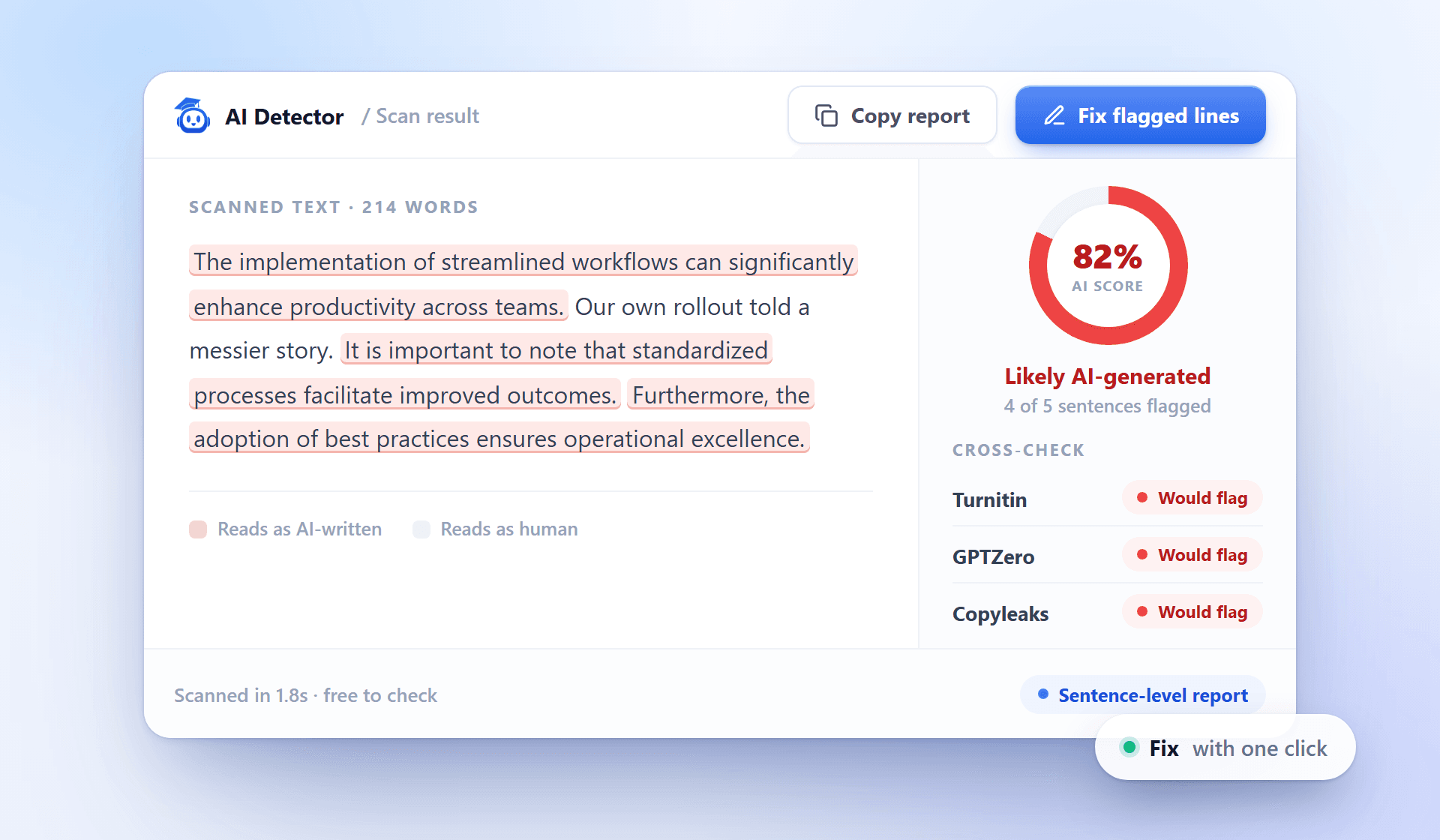
Phrasly’s AI Detector is a standalone tool, also sold as part of Phrasly’s eight-tool platform, that scans text and returns a percentage estimate of how likely it is AI-generated, along with sentence-level highlighting showing exactly which parts triggered the flag. It’s built to catch output from ChatGPT (including GPT-5/5.1), Claude, Gemini, Grok, Perplexity, Meta Llama, and other major writing tools.
Unlike detectors that license third-party detection APIs, Phrasly trains its own models in-house, using what it describes as over a million real human-written articles as the base dataset. This is the same underlying approach it uses for its humanizer, and the company frames it as a meaningful distinction: a model trained on what genuine human writing looks like, rather than one trained mainly to spot known AI patterns, should in theory generalize better as new AI writing tools appear.
The tool distinguishes between three categories of text rather than a single binary label: fully AI-written content, human writing that used AI for light editing or grammar assistance, and original human writing that happens to overlap with some AI-like patterns. That third category is where most false positives come from, and it’s the one Phrasly spends the most effort addressing.
How It Works
The stated detection logic looks at four broad signal types:
- Writing flow and structure: humans vary sentence length and paragraph rhythm more than AI models typically do. AI-generated text tends toward more even, predictable pacing across a whole document.
- Language authenticity: generic, “safe” phrasing versus personal or idiosyncratic word choice, cultural references, and unexpected turns of phrase that AI models tend to avoid.
- Contextual depth: whether ideas build on each other naturally across paragraphs or stay surface-level coherent without real development. AI can sound fluent sentence to sentence while lacking depth across the piece as a whole.
- Consistency patterns: AI text tends to hold a uniform tone and quality throughout an entire document, while human writing naturally drifts, corrects itself mid-thought, and shifts style depending on energy or subject matter.
Rather than issuing a flat “AI or not” verdict, Phrasly returns a probability score and explicitly frames it as one signal for holistic assessment. This positioning is aimed at educators who need to avoid punitive false positives, not just a binary gotcha tool. The company also states it updates its models as new AI writing tools and newer model versions (GPT-5.1, newer Claude and Gemini releases, and so on) become available, since a detector trained only on older model outputs loses accuracy over time.
Using the Tool, Step by Step
Step 1: Paste your text.

Step 2: Get an instant score.

Step 3: Review and revise flagged sections. 
Handling of Non-Native English Writing
One detail worth calling out: Phrasly explicitly acknowledges that non-native English speakers writing in simple, clear sentences are more likely to get false-flagged, since that writing style can statistically resemble AI-generated prose. The company’s stated mitigation is analyzing full documents rather than isolated sentences and weighting probability rather than issuing an absolute judgment, though this is a documented weak point across the entire AI-detection industry, not something unique to Phrasly.
Part of a Wider Platform
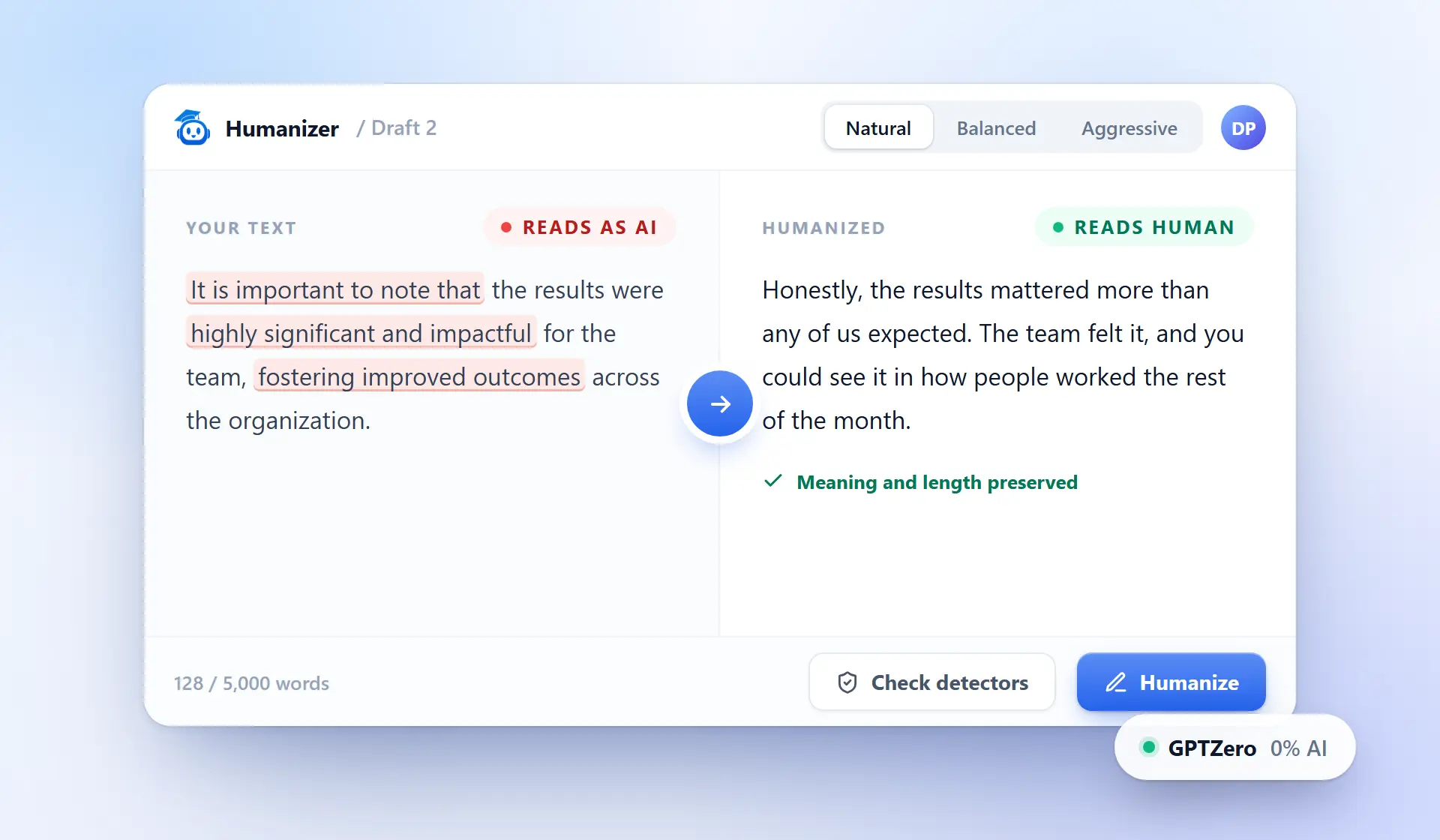
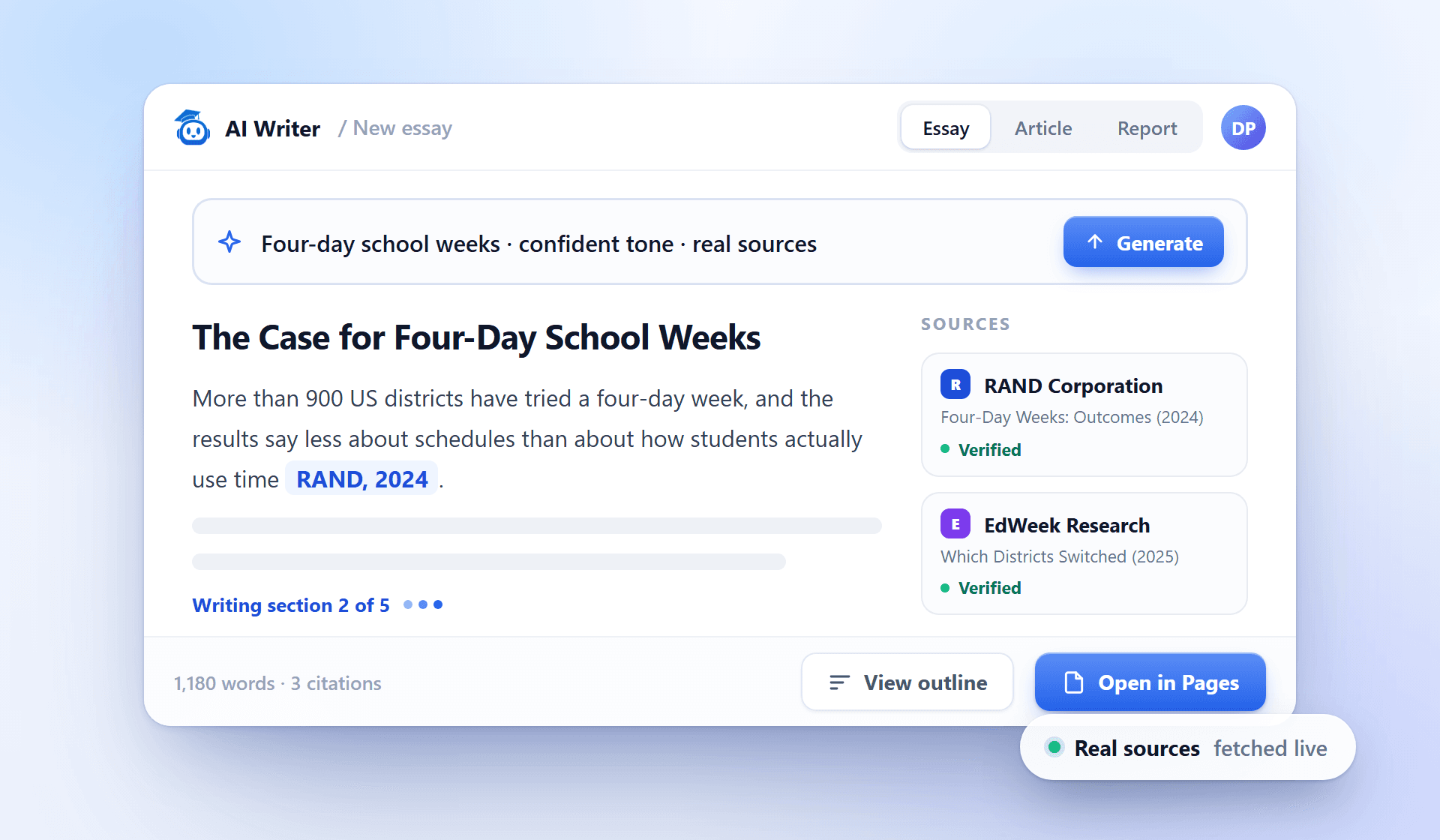
The detector isn’t a standalone product. It’s one of eight tools bundled into Phrasly, and the other tools are built on the same human-data-trained approach.
Key Claims
- 99.8 percent accuracy on content that is fully AI-generated, per Phrasly’s own reporting (typical competitors report 95 to 98 percent on the same kind of claim).
- No word limit, no scan limit, no signup. The detector runs the same whether you’re checking a paragraph or a full dissertation.
- Under 10 second results, including full sentence-level highlighting.
- No data retention. Content is stated to be deleted immediately after the check, with no use for model training, and no account is required to run a basic score.
- Minimum 30 word input, with support for English, Spanish, French, and German.
- Coverage across ChatGPT, GPT-5 and 5.1, Claude (all versions), Google Gemini and Bard, Meta Llama, and outputs from AI writers like Jasper and Copy.ai.
As with any vendor-reported accuracy figure, treat the 99.8 percent number as a claim rather than an independently verified benchmark. No public, standardized, third-party audit of Phrasly’s detector accuracy currently exists, and detector accuracy in general varies significantly depending on the length of text, the AI model that generated it, and how heavily the text was edited afterward.
Who It’s Built For
Phrasly frames the detector around four main use cases, each with a slightly different reason to run a check:
- Students checking a draft before submission, to see how an instructor’s own detection tool (Turnitin, SafeAssign, or a school-specific system) might score it.
- Educators reviewing student work as part of a broader academic integrity assessment, not as a sole basis for accusation.
- Writers and content teams confirming that a piece reads as authentically human before publishing, particularly for SEO content that may otherwise get flagged by search engines or clients.
- Professionals proofing AI-assisted reports or presentations before circulating them, to catch language that reads as obviously machine-generated.
Pricing
The detector itself is completely free with no tiered limits. Sentence-level highlighting requires a free account sign-in; running the raw percentage score does not. Phrasly’s paid plans unlock the humanizer, content generator, plagiarism checker, and the rest of the eight-tool suite. The detector isn’t the thing being gated.
| Plan | Price | What’s included |
|---|---|---|
| 3-Day Trial | $2.00 flat | Unlimited humanization words (capped at 50 uses per day), Phrasly Ultra access, about 6,000 content-generator words, 800 words per process |
| Unlimited | $10.99/mo (billed annually) | Unlimited humanization words, Phrasly Ultra access, 100,000 plagiarism-check words per month, 50,000 content-generator words per month, 5,000 words per process |
Note: Phrasly’s pricing page is laid out as text and pricing cards rather than a single screenshot-able image, so no image reference is included for this section. The table above reflects the current published plans. Phrasly also offers a separate API and business tier for teams that want to build detection or humanization directly into their own products, priced and contracted separately from the consumer plans above.
Pros
- Genuinely free with no character cap, unlike most competitors’ “free” tiers that stop at a few hundred words
- No account required for a basic score, and no email or signup wall before you can test the tool
- Proprietary model trained on human data rather than a repackaged third-party detector, which the company argues gives it more control over accuracy and update speed
- Sentence-level highlighting shows exactly what triggered the flag, not just a single score
- Explicitly built around reducing false positives for ESL writers and formal or technical writing styles
- Covers a wide range of AI models rather than only detecting ChatGPT output
- Privacy-forward handling: content is stated to be deleted immediately after analysis rather than retained
Cons
- Accuracy and false-positive-rate figures are self-reported, not third-party audited
- Highlighting, the most useful diagnostic feature, is locked behind account creation
- Four-language support (English, Spanish, French, German) is narrower than some competitors covering a dozen-plus languages
- As with every AI detector on the market, results should not be treated as definitive proof of AI authorship, and Phrasly itself says so
- No offline or bulk-upload workflow for checking many documents at once outside of the API tier
Verdict
For anyone who just needs a quick, uncapped AI check, whether that’s students verifying a draft before submission, educators screening a batch of assignments, or writers confirming their own work reads as human, Phrasly’s detector is one of the more usable free options simply because it doesn’t nickel-and-dime word count. The tradeoff is that, like every AI detector, its accuracy claims are vendor-reported, and no detection tool should be the sole basis for an accusation of AI use. Pair a result from Phrasly with at least one other detector before treating a high score as conclusive, particularly for borderline scores in the 30 to 70 percent range where false positives are most common across the industry.
FAQ
Is Phrasly’s AI Detector really free? Yes. There’s no word limit, no scan cap, and no payment required for the base score. Sentence-highlighting requires a free sign-in, but that sign-in itself is also free.
Which AI models can it detect? ChatGPT (including GPT-5/5.1), Claude, Google Gemini, Grok, Perplexity, Meta Llama, and other major LLM outputs, per Phrasly’s published coverage. The company states it updates detection models as new AI tools and versions are released.
Does Phrasly store the text you check? Phrasly states content is deleted immediately after analysis and not used for training or shared with third parties. No account is required to run a check, which limits how much personal data is tied to any submission.
How does it compare to Turnitin or GPTZero? Phrasly reports 99.8 percent accuracy against a self-run benchmark. Turnitin and GPTZero use their own proprietary detection and don’t publish directly comparable third-party-audited figures. Turnitin in particular builds its own detection into the platform rather than relying on external tools, and schools that already license Turnitin will likely see its score used as the official one regardless of what other detectors report. Running text through more than one detector gives a more reliable picture than trusting a single score.
What should I do if I get a high AI score on writing I wrote myself? Phrasly’s own guidance is to add specific personal examples, vary sentence length, include anecdotes or observations, and diversify vocabulary, then re-run the check. If the text was AI-assisted rather than fully AI-written, running it through a humanizer tool before resubmission is the more direct fix, though that raises its own academic integrity questions depending on the assignment’s rules.
Can I check a whole document at once, or does it need to be broken into sections? The detector has no stated word limit, so a full essay or report can be checked in a single pass. Very long documents may still be easier to review in sections simply because the sentence-level highlighting becomes harder to scan across a long unbroken piece.
Is a high score from Phrasly proof that someone used AI? No, and Phrasly says as much in its own FAQ. The company recommends treating detection percentage as one input into a broader judgment that also considers the writer’s typical style, whether AI use was actually prohibited for the task, and the real possibility of a false positive, especially for non-native English writers or highly technical, formulaic subject matter.
Further Reading on Phrasly’s Blog
Phrasly publishes ongoing guides on AI detection policy in schools:
- Do Colleges Check for AI? What Students Must Know (2026)
- Do Law Schools Use AI Detectors? What Applicants and Students Must Know
- Why Turnitin Flags Human Writing as AI (And How to Fix It)
- 9 Best AI Detectors in 2026: AI Checker Tools Tested for Accuracy
All product screenshots and images in this review are sourced from phrasly.ai.