
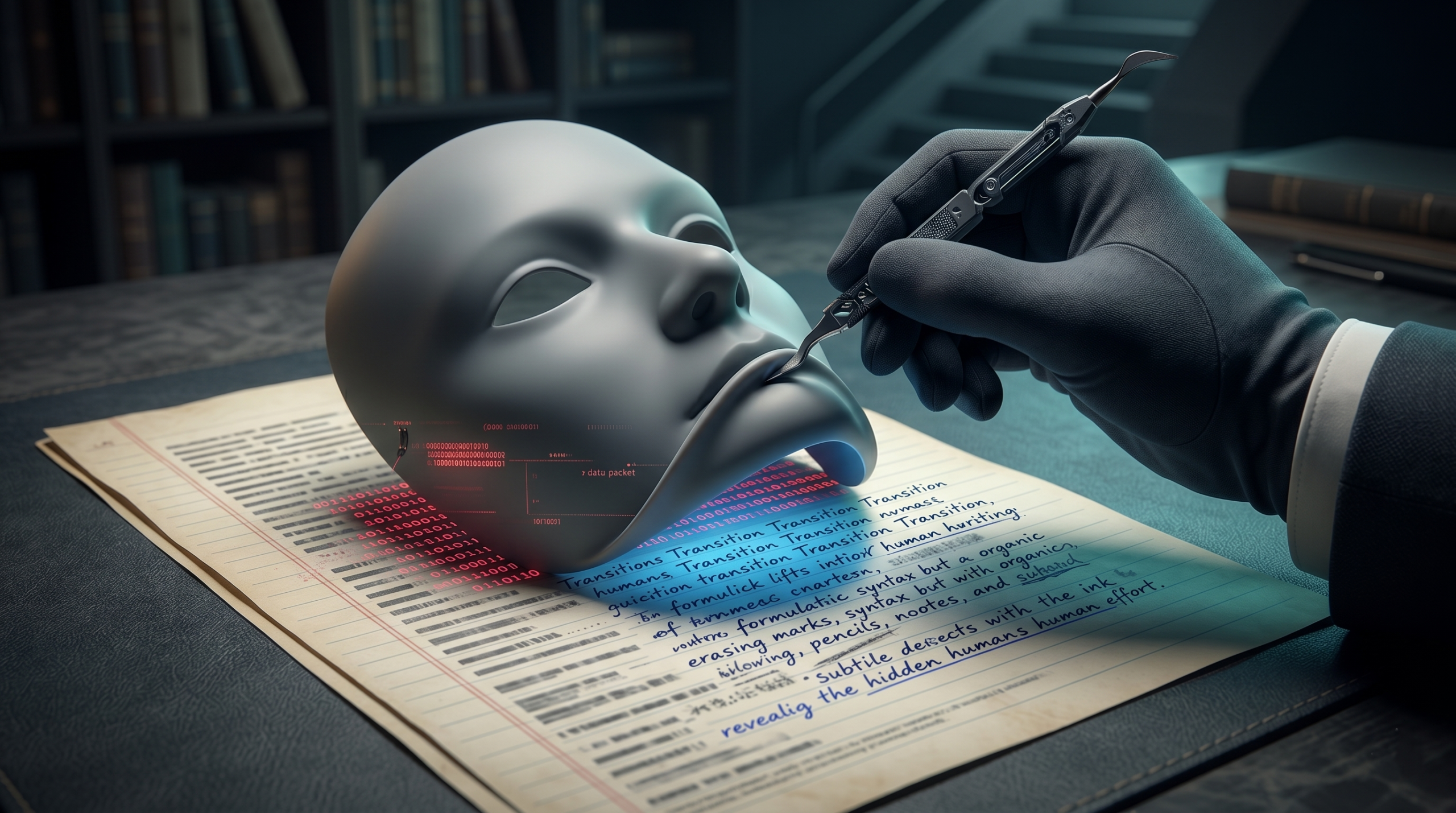
Educators face an ethical crisis disguised as a technological solution. As schools rapidly deploy software to catch cheating, a disturbing pattern has emerged: the technology is systematically penalizing international and non-native writers. If you are an educator evaluating the best AI detectors for teachers, understanding this algorithmic bias is the most critical step toward maintaining classroom equity.
An AI detector for ESL students is a precarious concept. Because these tools evaluate writing based on mathematical predictability rather than true comprehension, they frequently mistake the structured, diligent efforts of a non-native speaker for machine generation. In this deep dive, we break down the exact research behind these alarming false-positive rates and outline how teachers can protect their most vulnerable students.
Key Takeaways
- AI detection models penalize “low perplexity” (predictable phrasing), which inherently disadvantages ESL writers who rely on formulaic syntax.
- A landmark Stanford study demonstrated a massive false-positive bias, incorrectly flagging TOEFL-level essays up to 61% of the time.
- Basing academic disciplinary action solely on automated scores for non-native speakers presents a severe equity and discrimination risk.
- Teachers must actively clear false positives by adopting robust manual verification workflows and selecting fairer software tools.
Understanding the False Positive Bias Against Non-Native English Writers
To understand why an AI detector wrongly flags ESL students, you have to look under the hood of the software. Detectors do not read essays for meaning; they calculate statistical probability through two core metrics: perplexity and burstiness.
Perplexity measures how predictable a writer’s vocabulary is. Burstiness measures the variation in sentence length and structure. Large Language Models (LLMs) like ChatGPT are programmed to output highly predictable, uniformly structured text (low perplexity, low burstiness) so that it is universally easy to read.
The Algorithmic Trap
When a non-native English speaker learns to write academic papers, they are taught to use a rigid, structured approach. They rely on standard transitional phrases (e.g., “Furthermore,” “On the other hand”) and clear, straightforward vocabulary to ensure their point is understood.
This creates a disastrous overlap. The authentic human effort of an ESL student mathematically mirrors the exact low-perplexity, low-burstiness profile of a machine. The software’s architectural flaw guarantees a higher false positive rate (data) for this specific demographic.
What the Landmark Stanford Study Revealed About ESL Writing
The concern over algorithmic bias is not just anecdotal; it is heavily documented. A prominent Stanford University research team investigated how popular GPT detectors performed when evaluating essays written by non-native speakers (such as essays submitted for the TOEFL exam).
False-Positive Warning (Equity Risk):
The researchers discovered that more than half of the human-written ESL essays were flagged as AI-generated by the software, with some detectors achieving a shocking 61% false-positive rate. In stark contrast, essays written by native eighth-graders were accurately classified as human over 90% of the time.
This data exposes a fundamental truth: utilizing a generic AI detector on non-native writing is inherently discriminatory if the output is used as definitive proof of academic misconduct.
How Teachers Can Protect ESL Students From False Flags
Educators must proactively adjust their academic integrity policies. You cannot assume the software is acting neutrally.
Defensible Verification Workflows
When an ESL student triggers a high AI probability score, an instructor must immediately pivot away from the software dashboard. Understanding AI detector false positives: what teachers should do involves an immediate shift to process-based evidence.
- Audit Document History: Check the Google Docs or Microsoft Word version history to verify organic, keystroke-by-keystroke drafting.
- Review the Baseline: Compare the flagged essay’s syntax to the student’s early-semester, handwritten assignments.
- Conduct an Oral Review: Ask the student to explain specific vocabulary choices or structural decisions in a low-stress setting.
For students caught in the crossfire of this algorithmic bias, the emotional toll is immense. We highly encourage educators and students to review our comprehensive guide on what to do if you are falsely accused of using AI, which details exactly how to present process evidence to an appeal board.
Finding a Fairer AI Detector for ESL Students
If you are going to run an AI detector for ESL students’ work, you must select enterprise-level tools that actively optimize for equity rather than simply maximizing their detection net.
Tester’s Note:
In our controlled internal tests using verified ESL-style essays, basic ad-supported web detectors flagged human writing constantly. However, advanced institutional tools displayed far more nuance, analyzing deeper syntactical markers to dramatically lower their false-positive margin on formulaic writing.
We recommend exploring platforms like Copyleaks, which provides a highly refined detection model explicitly built for institutional integrity, prioritizing low false-positive rates to protect human writers. Review our in-depth analysis of the fairest tools on the market to ensure your classroom software protects, rather than targets, your diverse student body.



Frequently Asked Questions
Why do AI detectors flag ESL students?
AI detectors wrongly flag ESL students because their algorithms are trained to identify low perplexity and low burstiness. Non-native English writers often rely on a highly structured, uniform vocabulary and predictable, formulaic transitional phrases, which statistical detection models misinterpret as machine-generated text.
What false positive rate do ESL writers face?
Research indicates that non-native English writers face an exceptionally high false positive rate when scrutinized by standard software. In controlled academic environments, some traditional text models have been shown to flag clean ESL essays as machine-generated content more than half the time.
What did the Stanford study find about non-native English?
The landmark Stanford University study discovered that popular AI detection tools misclassified authentic human essays written by non-native English speakers up to 61% of the time. The study highlighted a systemic architectural bias that misinterprets simplified, structured syntax as machine-generated prose.
Which detectors are fairest to ESL students?
In our independent classroom evaluations, platforms like Copyleaks and Pangram Labs demonstrate the highest equity metrics for non-native English writers. These tools are actively calibrated with advanced multi-layered models that look beyond simple vocabulary predictability to reduce algorithmic false-positive bias.
Is it discriminatory to use AI detectors on ESL work?
Using AI detectors without rigorous human verification can lead to discriminatory outcomes against non-native writers. Because the underlying software disproportionately misidentifies ESL syntax patterns as machine text, relying blindly on automated scores violates student due process and equitable grading standards.
How can teachers protect ESL students from false flags?
Teachers can protect non-native writers by establishing clear early-term writing baselines and checking document editing history. Never issue an academic penalty based on a standalone software percentage; instead, use an automated flag strictly as an invitation for a supportive discussion.
Do detectors flag simple or formulaic writing as AI?
Yes, automated detectors routinely flag simple or highly formulaic text as artificial. Because generative language tools are engineered to output clear, statistically optimized phrasing, a human student utilizing a basic vocabulary or rigid structural transitions will inadvertently trigger the software’s thresholds.
Should ESL submissions be exempt from detection?
Exempting submissions completely can cause policy consistency challenges, but instructors should apply a radically different evaluation threshold. Automated scores for non-native writers should be viewed with extreme skepticism, requiring substantial external process evidence before any academic integrity review is initialized.
What evidence helps clear an ESL false positive?
To clear an unfair flag, a student can provide objective process evidence. This includes the complete Google Docs or Microsoft Word editing history, early research outlines, date-stamped notes, and demonstrating their ability to explain their syntax and thesis during an oral review.
Are any detectors calibrated for non-native English?
While several modern platforms claim continuous optimization, very few standalone software tools are perfectly calibrated for non-native English. This is why educators must always combine software outputs with human pedagogical assessment to ensure fairness for every student in the classroom.